
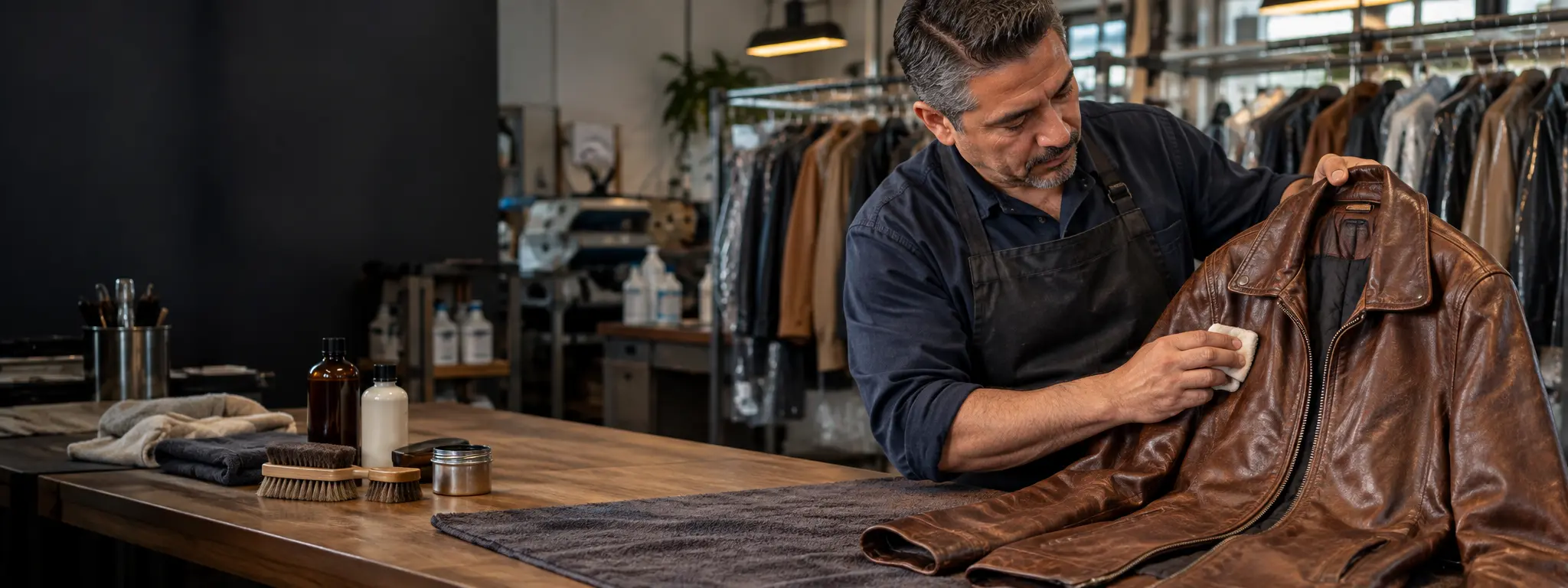
Ordinary dry cleaning and leather cleaning are different
A standard dry-cleaning process is designed for many textile garments, not for every natural skin or finish. The Federal Trade Commission's Care Labeling Rule defines the instruction leather clean as cleaning by a professional who uses special leather or suede care methods. That distinction matters even when a leather jacket has a fabric lining or resembles another dry-clean-only garment.
Read every attached label before choosing a method. Instructions may identify leather cleaning, warn against washing, limit heat or address removable trim. If the label is missing or unclear, do not substitute a generic online method. Material, tanning, dye, coating, construction and existing wear must be assessed together before a process can be recommended.
Confirm what the garment is actually made from
Smooth leather, suede and nubuck are related materials, but their surfaces are not interchangeable. Suede has a raised nap that can flatten, mark or change direction. Finished leather may have pigment, protective coatings or decorative effects. A garment can also combine natural skin with textile panels, knit cuffs, adhesives, hardware, embroidery or a separate lining, each with its own care limits.
Faux leather and faux suede are manufactured materials rather than natural skins. They may use polyurethane, polyester or other components and can peel, crack, delaminate or react to heat as they age. Do not assume a product labeled vegan leather, pleather or microsuede should receive natural-leather treatment. Bring the label with the item so the cleaner can identify the stated composition and evaluate the whole piece.
What to do after a spill
Act promptly, but keep first aid minimal. Lift away loose material without scraping the surface. Blot liquid gently with a clean, absorbent white cloth; do not rub, scrub or spread the moisture. Avoid household detergents, alcohol, baby wipes, stain pens, baking soda, shoe polish and general-purpose cleaners unless the garment manufacturer specifically approves the product for that exact material and finish.
Do not test a home remedy on a hidden area and assume the visible section will react the same way. Dye application, wear and exposure can vary across one garment. Water can also leave a boundary or change the nap, while oils and conditioners may darken an area. Note what caused the spot, when it happened and everything already applied, then arrange item-specific professional evaluation.
What if leather or suede gets wet in the rain?
Do not place a wet leather or suede garment in a dryer or aim a heater or hair dryer at it. High or concentrated heat can affect shape, finish and flexibility. Gently blot surface moisture, support the garment and allow it to air away from direct sunlight and heat. Avoid wringing, aggressive brushing or stretching the item while it is damp.
A brief exposure and a soaked garment are not the same situation. If the piece is saturated, has water marks, feels stiff, transfers color or contains delicate trim, seek professional guidance promptly. Do not seal a damp garment in plastic for transport or storage. Tell the cleaner whether the moisture came from clean rainwater, a drink, flooding or another source because contamination changes the evaluation.
Why color and texture may not look identical afterward
Leather and suede are natural materials, and the appearance seen at drop-off includes the original finish plus wear, light exposure, body oils, abrasion and previous care. Cleaning can make pre-existing fading, scuffs or color variation more apparent. Suede nap may also show differences in direction or wear, especially at cuffs, elbows, pockets and collars.
That is why responsible evaluation includes realistic expectations rather than a promise that every stain will disappear or the color will return to an exact original shade. Point out areas that matter most and mention any prior recoloring, waterproofing, conditioning or repair. Matching pieces, detachable belts and trim should be identified so the cleaner can discuss whether they need to be evaluated together.
Skip unapproved oils, conditioners and waterproofing sprays
A product marketed for shoes, furniture or car interiors is not automatically suitable for a garment. Conditioners and dressings can change color, sheen and feel, attract soil or interfere with later treatment. Waterproofing sprays may leave uneven coverage or affect a finish. Museum-oriented National Park Service guidance on leather dressings also cautions against indiscriminate application; while historic objects differ from wearable garments, the practical lesson is to avoid adding an unknown treatment without material-specific guidance.
If the manufacturer recommends a named maintenance product, follow the instructions and test requirements exactly. Otherwise, ask a leather-care professional to evaluate the piece before applying anything. When a product has already been used, bring its name or a photo of the label. That information is more useful than trying to remove or cover the result with another product.
Prepare the garment for evaluation and storage
Empty pockets and bring the complete garment with its care and material labels attached. Point out stains, odor, rain exposure, tears, loose seams, brittle areas and places where color transfers to a cloth. Explain the deadline, but expect specialty cleaning to take longer than ordinary garment care. Acceptance, timing and price should be confirmed only after inspection because construction and condition vary widely.
Between wears, store a clean, dry garment in a cool interior closet away from direct light, heat sources and damp areas. Use a broad, supportive hanger when the garment's weight and condition permit, and avoid crushing it between other items. Do not leave it long-term in the thin plastic bag used for transport. Comet Cleaners North Houston's leather and suede cleaning page explains the evaluation and specialty-processing approach; use the locations page to choose a store and bring the item in for review.