
Let the complete care label decide
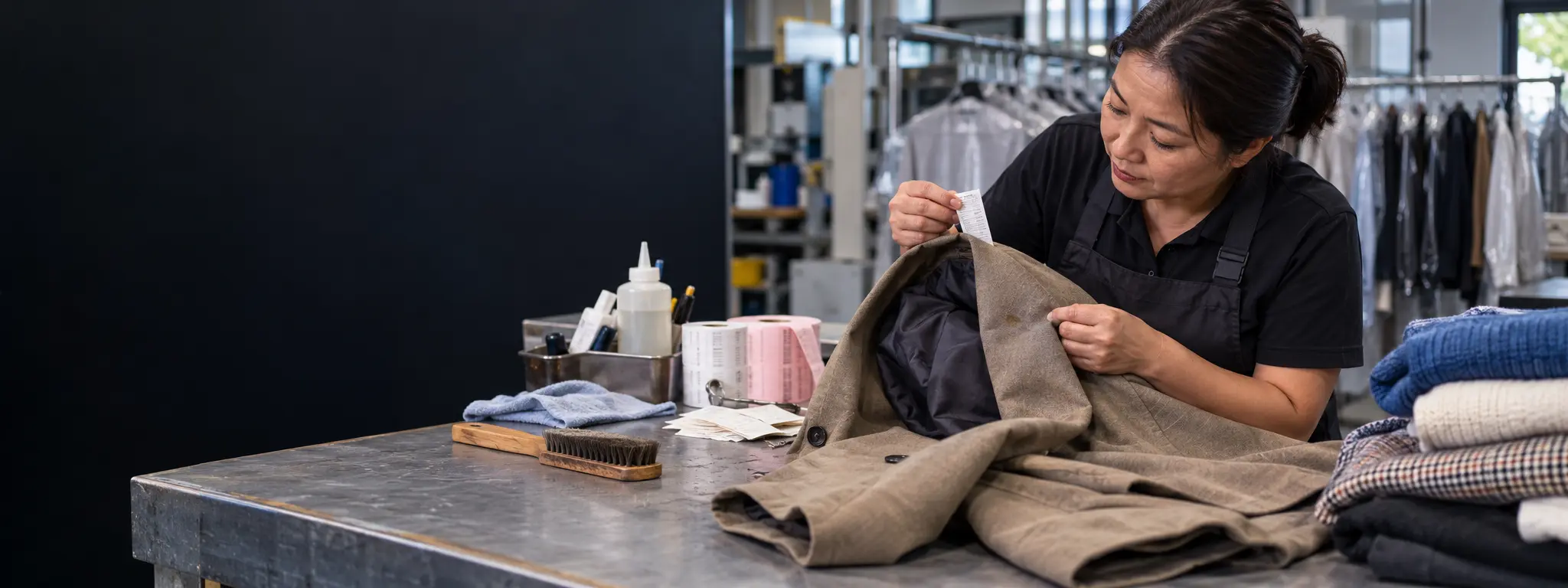
Start with the permanent care label and read every instruction for washing, drying, ironing and professional cleaning. The Federal Trade Commission's cashmere labeling guidance explains that a dry clean only label means the item cannot be washed safely. A label that says dry clean identifies a supported method but does not automatically give you a tested home-washing procedure.
Check the entire sweater, not only its fiber-content tag. Cashmere may be blended with wool, silk or synthetic fibers and combined with buttons, zippers, leather, embroidery, beads, shoulder structure or bonded decoration. Those components can respond differently to moisture, agitation, detergent and heat. If the label is missing, unreadable or conflicts with the construction, request professional evaluation rather than experimenting.
Wash at home only when the label permits it
If the label specifically allows machine washing, follow its temperature and cycle directions. Woolmark's wool-sweater care guidance recommends turning a washable sweater inside out or placing it in a laundry bag, using a detergent intended for wool and selecting the machine's wool setting. If there is no wool setting, Woolmark points to a cold or delicate cycle, but the garment's own label still takes priority.
If the label calls for hand washing, use the exact temperature and method it specifies. Support the sweater when wet and avoid rubbing, twisting or wringing the knit. Do not assume that a gentle cycle is equivalent to hand washing, or that hand washing is safe for a dry-clean-only garment. Use only a care product compatible with the label and follow its measured dosage; extra detergent does not create a gentler wash.
Need help with your garments locally?
See how we review care labels, knit construction, trim, visible stains and garment condition before recommending care. Professional dry cleaning is available through our North Houston stores.
For everyday dry cleaning and laundry, free pickup and delivery runs on Tuesdays and Fridays in The Woodlands and select nearby neighborhoods. Normal cleaning charges apply; no membership is required. Tell our team about stains and any treatment already attempted.
Check pickup availabilityWhen dry cleaning is the better choice
Choose professional care when the label directs it, when the sweater has an unknown stain or unstable color, or when decoration and mixed materials make water care uncertain. Dry cleaning can also be appropriate for a cashmere jacket, structured cardigan or garment with a lining or trim that cannot be separated from the knit. Bring detachable pieces when the label indicates they should be cleaned together.
Point out stains and identify their cause when possible. Tell the cleaner whether water, heat, a stain pen, soap or another product has already touched the area. Professional evaluation does not guarantee that every old stain can be removed without risk to color, texture or finish, but it allows the cleaner to weigh treatment options against the condition and construction of the complete garment.
Dry the sweater flat and reshape it gently
Unless the label expressly permits another method, do not tumble dry cashmere. Woolmark's wool-drying guidance recommends drying knitwear flat and away from direct sunlight. Support the full garment when lifting it from the wash so the weight of retained water does not stretch the shoulders, neckline or sleeves.
Place the sweater on a clean, dry surface that allows air circulation and gently guide it back to its natural dimensions without pulling. Keep it away from radiators, hair dryers and other direct heat. Do not hang a wet knit from the shoulders. If the sweater has stretched, transferred color, developed a tide mark or changed texture, stop adding moisture or heat and arrange an item-specific evaluation.
Treat spills conservatively
Blot a fresh liquid with a clean, absorbent white cloth. Lift loose material with a dull edge without pressing it into the knit. Do not scrub the fibers or apply bleach, dish soap, alcohol, stain pens or homemade mixtures unless the sweater's manufacturer approves that treatment. A product that works on a washable cotton shirt may alter cashmere dye, softness or surface texture.
Keep the sweater away from a dryer or iron while a stain remains. Arrange cleaning promptly for oil, cosmetics, wine, coffee, food or an unidentified mark, and disclose every treatment already attempted. If the label permits washing and provides a stain-treatment method, follow it exactly. Otherwise, professional review is safer than trying a series of products that may make the original stain harder to address.
Pilling is caused by friction, not dirt
Small fiber balls can develop where a sweater rubs against itself, a desk, a bag strap or outerwear. Woolmark's pilling guidance identifies common areas such as elbows, underarms, sleeves and sides. Washing more often is not necessarily the solution because abrasion during wear and care can contribute to the problem.
Remove pills only when the sweater is clean, dry and laid flat. A few loose pills may be lifted gently by hand. A cashmere comb or fabric shaver can damage fine yarn if it catches a loop or is pressed too firmly, so follow the tool's directions and work conservatively. Stop if the knit is thin, snagged, embroidered or visibly damaged, and ask for professional advice before continuing.
Air, rest and fold between wears
A sweater does not automatically need cleaning after one brief wear. Allow it to air flat before returning it to storage, and address food, body oil, cosmetics and visible soil before they remain for a long period. Woolmark recommends resting wool garments between wears so the fibers can recover. Keep bags, rough jackets and repeated desk friction in mind if pilling develops quickly.
Fold cashmere rather than hanging it for routine storage. Woolmark advises hanging woven wool garments but folding knits, which helps prevent shoulder bumps and lengthwise stretching. Empty pockets and fasten closures as appropriate before folding. Do not stack so much weight on top that decorations, collars or sharp folds are crushed.
Clean before seasonal storage
Store cashmere only when it is clean and completely dry because food residue and body oils can attract textile pests. Use a clean, dry interior area away from direct light and heat. Follow the manufacturer's directions for any storage or moth-control product, keep chemicals from direct contact with the sweater and inspect stored garments periodically for moisture, insects or damage.
For a missing label, difficult stain, damaged knit, mixed-material construction or valuable sweater, bring the item to a Comet Cleaners North Houston location for evaluation. Our dry-cleaning service page explains how garments are inspected, cleaned and professionally finished. Item-specific review is the right next step when general cashmere advice and the sweater's actual construction do not clearly agree.