
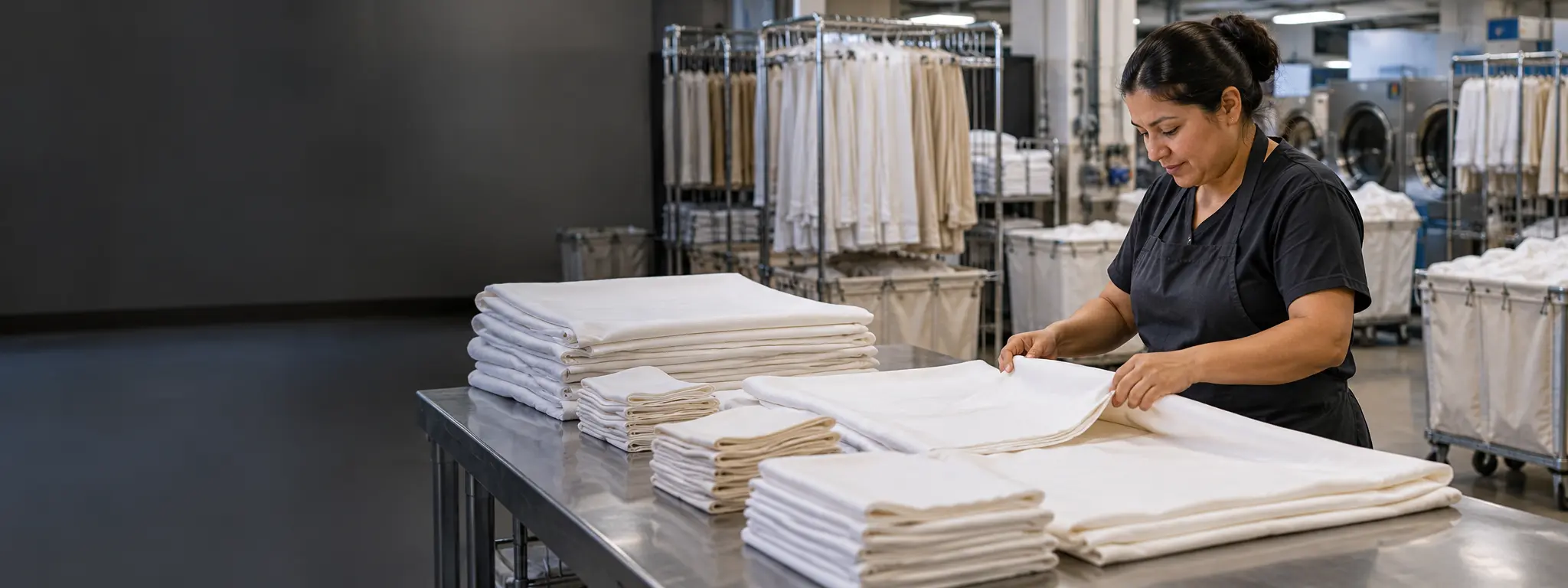
Start with the label, fiber and construction
Read every attached care label and save any manufacturer's hangtag or packaging instructions. Table linens may be cotton, linen, polyester, a blend or a specialty fabric, and they may include embroidery, lace, metallic thread, beading, printed borders or finishes that change which products and temperatures are safe. A white cloth is not automatically safe for chlorine bleach, and a fabric that tolerates washing may still have limits on drying or ironing.
If the instructions are missing, do not guess. Separate vintage, handwoven, decorated and sentimental pieces for professional evaluation. Dyes, trims, backing and prior repairs can react differently to water, stain removers, solvents and heat. Preserve the stain information and avoid adding another chemical to the problem.
Act quickly, but do not scrub
Remove plates and loose food carefully. Lift solids with the edge of a spoon or another dull tool, working from the outside toward the center so the spot does not spread. Blot liquid with a clean, absorbent white cloth. Do not rub the fabric together or scrub with a colored towel; friction can spread residue, distort fibers and transfer dye.
The American Cleaning Institute's stain-removal guidance recommends treating stains early, pretreating them and laundering according to the fabric's instructions. It also advises repeating treatment when a stain remains and keeping the item out of the dryer until the stain is gone. That last step matters for table linens because ironing can also expose an overlooked mark to heat.
Need help with your garments locally?
See how tablecloths, runners and event linens are reviewed for fabric, size, staining and finishing needs before processing. Table linen cleaning and pressing is available through our North Houston stores.
For everyday dry cleaning and laundry, free pickup and delivery runs on Tuesdays and Fridays in The Woodlands and select nearby neighborhoods. Normal cleaning charges apply; no membership is required. Tell our team about stains and any treatment already attempted.
Check pickup availabilityFor grease, butter and gravy
Gently lift off any food or thick residue without pushing it farther into the weave. For a clearly washable, colorfast item, follow the label and the directions on a compatible prewash stain remover or liquid laundry detergent. Test the product on an inconspicuous area first when the manufacturer's instructions call for it. Use the warmest water allowed by the label, not the hottest water available.
Do not mix household chemicals; products can react, discolor fabric or create hazardous fumes. If the linen is dry-clean-only, vintage, decorated or made from an uncertain fiber, blot excess oil and stop. Tell the cleaner what caused the spot and whether any product or water has already touched it. Point out every affected area.
For wine, coffee, juice and sauces
Blot fresh liquid instead of spreading it. If a washable item's directions support rinsing, work from the back with cool water so residue moves out rather than deeper into the fabric. Then use a treatment approved for the material and launder according to the label. Do not assume one treatment fits wine, dairy-based coffee, juice and tomato sauce equally.
Check the damp fabric in good light after washing. If color or an outline remains, repeat a label-safe treatment or request professional help before drying or ironing. New Mexico State University's home-furnishing care guidance recommends treating table-linen stains promptly and following the specific care required by the fabric. A set-in or unidentified stain deserves conservative handling, especially on pale, patterned or heirloom linens.
Handle candle wax as two separate problems
Wax leaves a solid deposit and may also leave oil or candle dye. Let fresh wax cool rather than smearing it while soft, then lift only what releases easily with a dull edge. Do not pull at embroidery or scrape a delicate surface. Keep the cloth away from an open flame, and avoid placing a hot iron directly over the spot: heat can spread melted wax or transfer candle color into the fabric.
After raised wax is removed, the remaining oil and dye need a method compatible with the textile. Colored candles, delicate fibers, vintage linens and decorations make the decision less predictable. Package the item dry, identify the candle color and request professional evaluation rather than experimenting with solvents.
Sort and document several stains after an event
Before gathering the table, mark each affected area in a way that will not damage the fabric. A written list or phone photo is safer than pins, tape or ink on the textile. Note whether the spill was oil, wine, coffee, sauce, wax or something unknown. Keep stained linens separate from clean ones, and do not leave damp pieces compressed in a hamper or sealed plastic bag.
If you are laundering compatible items at home, sort by care instructions, color and fabric rather than placing an entire event set into one load. The American Cleaning Institute's laundry guidance recommends identifying the stain, treating it promptly, blotting instead of rubbing and checking washed items before drying. More detergent is not automatically better; follow both the textile label and product directions.
Know when professional linen care is the safer choice
Request professional evaluation when the label directs professional cleaning, the fabric or dye is unknown, the piece is valuable or sentimental, or the stain covers a large area. The same caution applies to vintage linen, lace, embroidery, metallic decoration, unstable color, water rings, mildew, candle dye and any mark that changed after a home treatment. Explain what happened and disclose every product, temperature and treatment already used.
Professional cleaning still cannot guarantee that every stain will disappear without changing color, texture or finish. Age, prior heat, oxidation and earlier treatments affect what is possible. An inspection allows the cleaner to weigh stain removal against the risk to the textile and to set reasonable expectations before processing.
Clean and store linens before the next occasion
Inspect each piece before storage because pale food and oil residues can become more visible with time. Store only after the linen is clean and completely dry. University of Georgia textile guidance notes that repeated creasing can weaken linen and recommends rolling linen tablecloths rather than folding them for storage. If rolling is practical, use a clean tube and avoid sharp, repeated folds; otherwise, refold periodically so stress does not remain in the same place.
Keep stored linens in a clean, dry interior space away from direct light, heat and moisture. Before an important meal or event, unpack them early enough to inspect for stains and arrange cleaning or pressing. Comet Cleaners North Houston's table-linen cleaning and pressing service covers tablecloths, runners and event linens. Bring stained or uncertain pieces to a location so the label, fabric, decoration and condition can be reviewed before care is recommended.