
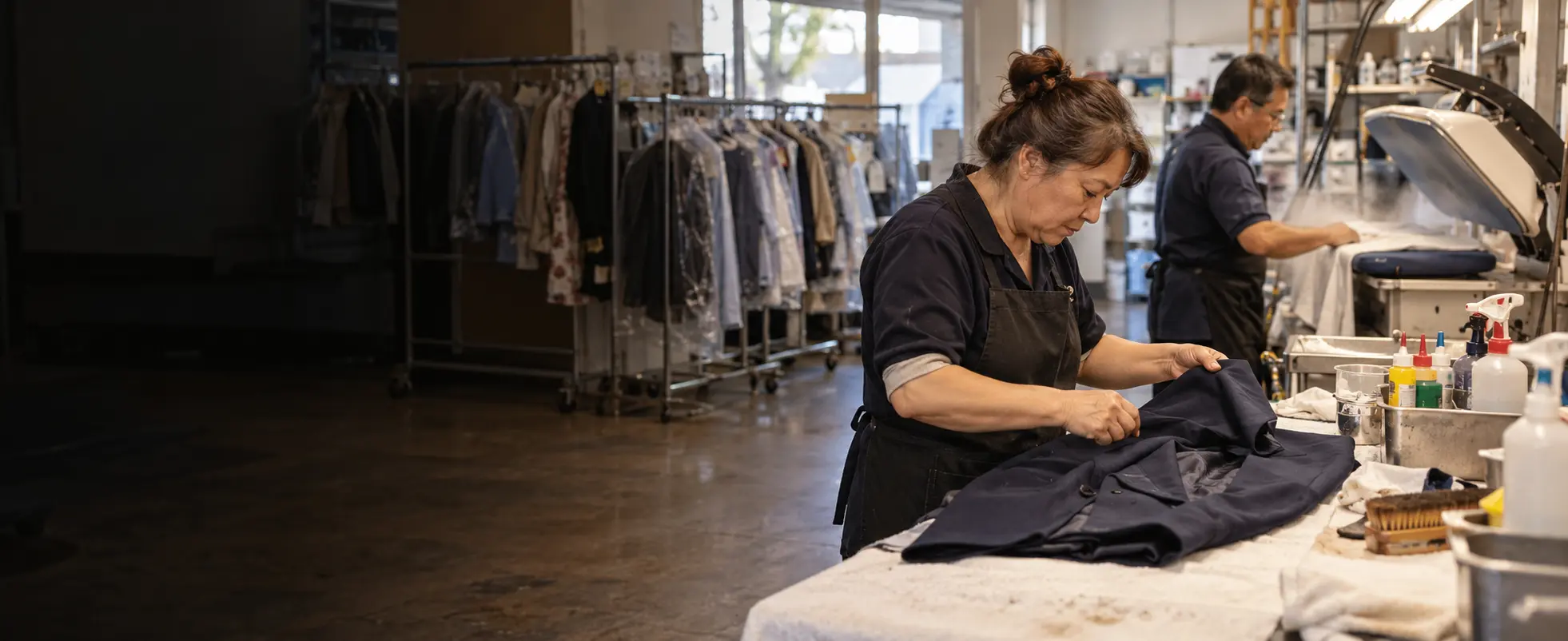
Read the complete care label first
The Federal Trade Commission's care-labeling guidance requires a supported washing or dry-cleaning instruction and necessary warnings. If a coat says dry clean only, washing is specifically excluded. A label that says dry clean identifies an approved method but does not necessarily mean every other method has been tested or approved for that finished garment.
Look beyond the face fabric. A wool coat can include a different lining, fusible layers, padding, buttons, leather details, faux-fur trim or a water-resistant finish. These components may respond differently to water, agitation, solvent, heat and steam. Follow every warning on the label, including limits on temperature, tumble drying, ironing or steam. If the label is missing or unclear, request an item-specific professional evaluation instead of guessing.
When professional dry cleaning is the sensible choice
Use professional care when the label directs it, when the coat is tailored or structured, or when it has an unknown stain, contrasting colors or delicate trim. Water and agitation can affect more than the wool fibers: internal layers may shrink at different rates, dyes may move and a shaped coat can lose its intended silhouette. A gentle or hand-wash setting does not remove those risks.
A cleaner should review the label, construction, visible soil and pre-existing wear before choosing a process. Point out every stain and disclose anything already applied. Special instructions on the label can require a modified process, so bring detachable belts, hoods or trim when they are part of the coat's care directions. No cleaner can responsibly promise that every old stain will disappear without risk to color, texture or finish.
A coat does not need cleaning after every brief wear
Wool is naturally resistant to odor, staining and creasing, so condition is a better guide than a rigid wear count. Woolmark's wool-care guidance recommends airing garments, resting them between wears and brushing woven wool lengthwise with a soft garment brush to remove surface soil. Empty the pockets so stored items do not pull the coat out of shape.
Inspect the collar, cuffs, pocket edges, underarms and front closure before putting the coat away. If it has no visible soil, persistent odor or spill, airing it on a supportive hanger may be enough between wears. Cleaning becomes more important after heavy use, exposure to food or smoke, visible staining, or before long-term seasonal storage. Always let the care label and the coat's actual condition lead the decision.
What to do after a spill
Blot fresh liquid gently with a clean, absorbent white cloth. Do not rub, scrub or spread the spot. Lift loose material carefully without pressing it deeper into the weave. Avoid stain pens, bleach, dish soap, alcohol and homemade mixtures unless the manufacturer specifically approves that treatment for the complete coat. A remedy that seems safe for an ordinary washable fabric may affect wool dye, finish or trim.
Arrange evaluation promptly and identify the substance when you can. Tell the cleaner when the spill occurred and whether water, heat or another product touched the area. This history helps determine an appropriate treatment and avoids mixing incompatible products. If the coat is labeled for home washing, follow its exact directions; do not assume generic wool-washing advice overrides the manufacturer's instructions.
How to handle a wool coat that gets wet
After light rain, shake off loose droplets gently and hang a woven coat on a broad, shaped hanger that supports the shoulders. Woolmark advises drying wool at room temperature away from direct sunlight and heat. Do not place the coat in a dryer, aim a hair dryer at it or hang it against a heater unless the care label expressly permits that method.
Do not store or transport a damp coat in a sealed plastic bag. If it is saturated, misshapen, stained by contaminated water, transferring color or showing a tide mark, seek professional advice before adding heat, brushing aggressively or applying a product. Support the garment's weight while wet and avoid wringing or twisting it. Item-specific evaluation is important because linings, interfacings and trim may react differently from the wool shell.
Press wrinkles without flattening the fabric
Some wool coats recover from light creasing after resting on a proper hanger. Woolmark notes that steam can help refresh wool, but the garment's label still controls whether steam or ironing is safe. Keep an iron from direct contact with the coat unless the instructions support it; too much pressure or heat can leave shine, flatten a raised surface or mark seams and edges.
If the coat is clean but needs a polished appearance, ask whether professional pressing or finishing is appropriate rather than ordering cleaning automatically. A cleaner can consider the fabric surface, construction and label before applying moisture, heat and pressure. Coats with velvet, faux fur, bonded layers, decorative finishes or unknown materials deserve particular caution.
Clean before seasonal storage
Food residue, body oils and unnoticed soil can attract pests or become harder to address during storage. Woolmark recommends cleaning wool garments before packing them away. Confirm that the coat is completely dry, empty every pocket, fasten closures as appropriate and use a broad hanger that supports the shoulders. Avoid crowding the coat where the lapels, sleeves or hem will be crushed.
Choose a cool, dry interior storage area away from direct light and heat. Use storage protection appropriate to the garment and follow the manufacturer's directions for any moth-control product; do not place a chemical product directly against the coat. Before the next season, inspect and air the garment. For a coat with a missing label, visible damage, a persistent odor or uncertain trim, bring it to a Comet Cleaners North Houston location for evaluation. Our dry-cleaning service page explains the inspection, cleaning and professional-finishing process.