
Let the care label make the first decision
The Federal Trade Commission's care-labeling guidance requires manufacturers and importers to provide instructions for at least one supported method of regular care. A washing instruction should identify hand or machine washing, an appropriate water temperature, drying information and necessary warnings. A dry-cleaning instruction identifies professional dry cleaning and may include restrictions on solvent, moisture, heat, tumbling or steam.
Read the full label rather than stopping at the fiber-content tag. Two garments made mostly from the same fiber can require different care because of dyes, linings, interfacing, adhesives, finishes, pleats or trim. If the label is missing, unreadable or inconsistent with the garment's construction, separate the item from an ordinary laundry bag and request an individual evaluation.
What usually belongs in wash and fold
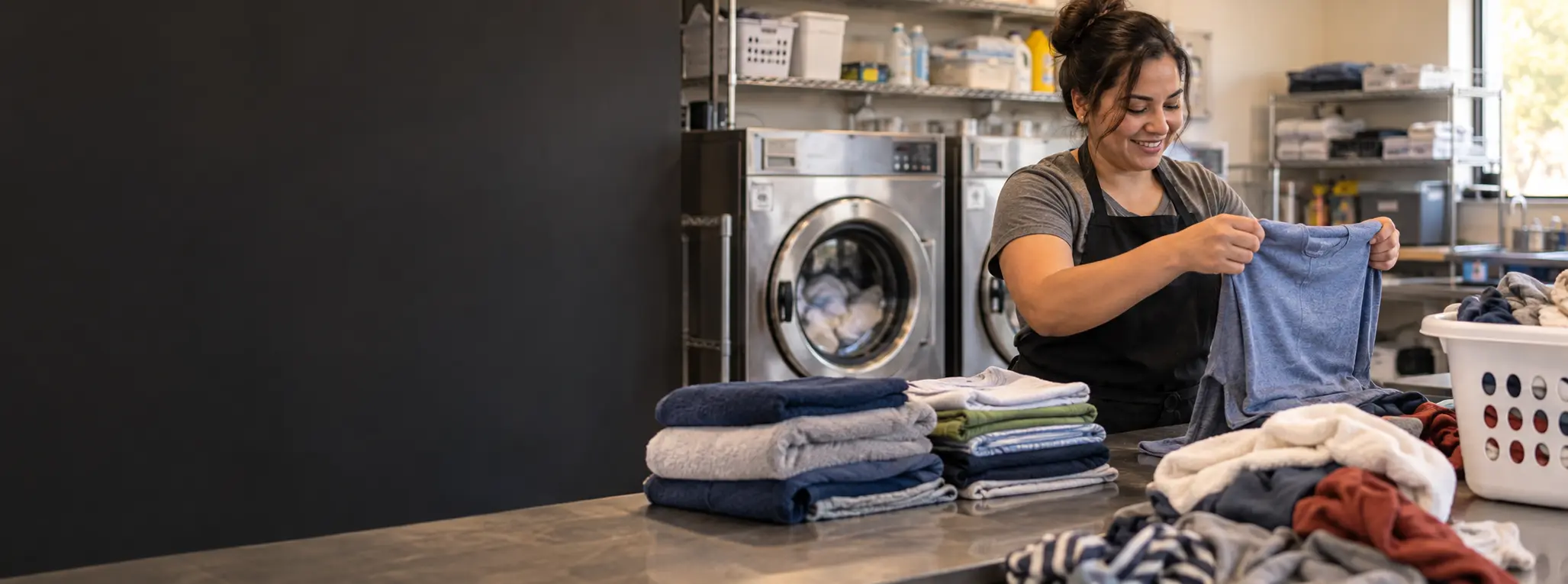
Everyday machine-washable clothing, towels and similar washable household laundry are typical wash-and-fold candidates when their labels support machine washing and tumble drying. The service is useful when the main need is routine washing, drying and folding rather than shaped pressing or special handling. Always check temperature, bleach and drying limits before treating an item as ordinary laundry.
Do not assume every cotton, polyester or casual garment can enter the same process. Dark or unstable dyes, performance finishes, decorated items and mixed-material garments may carry separate instructions. The American Cleaning Institute's laundry guidance recommends sorting by color, fabric type and washing instructions. Point out items with specific directions instead of burying them in a mixed bag.
What is more likely to need dry cleaning
A garment labeled dry clean or dry clean only should be separated for professional evaluation. Suits, tailored jackets, structured dresses, wool coats and garments with linings or interfacing often rely on dry cleaning when the manufacturer directs it. The process is not chosen simply because an item is expensive; it is chosen because the complete garment and its supported care method require different handling from routine machine laundry.
Dry cleaning is also distinct from specialty care. Leather, suede, wedding gowns, heavily embellished pieces and some household textiles may need processes beyond an ordinary dry-cleaning cycle. Bring those items separately and identify them at drop-off. The care label, construction, condition and requested result determine whether the item can be accepted and which service is appropriate.
Professional shirt laundry is a third category
A washable dress shirt does not always belong in the same category as folded household laundry. Professional shirt laundry combines washing with shaped mechanical finishing so collars, cuffs, plackets and sleeves receive a crisp presentation. The shirt's care label and construction still control the method, but the desired finish is different from a shirt simply being washed, dried and folded.
If you want business shirts returned on hangers, professionally pressed or folded in a particular way, identify them separately and discuss professional shirt laundry. A casual washable shirt may be suitable for wash and fold when the label permits it and a folded finish is acceptable. Do not place a dry-clean-only shirt or blouse into laundry because its shape resembles a washable dress shirt.
Stains can change the service decision
Before submitting either type of order, inspect collars, cuffs, underarms, pockets and any area affected by food, cosmetics, ink, oil or another substance. Point out the stain, say what caused it when known and disclose any water, heat or product already used. A normal cleaning process does not guarantee that every stain will disappear, and targeted treatment may need to occur before washing or dry cleaning.
Avoid placing a stained garment in a dryer at home before the problem is evaluated, because heat can make some residues harder to address. Do not add bleach, dish soap, stain pens or a homemade mixture to a dry-clean-only or uncertain item. For a clearly washable garment, follow the care label and product directions; if the stain or material is uncertain, keep the response conservative and seek professional guidance.
Drying and finishing matter as much as washing
A label that permits machine washing may still restrict tumble drying, temperature, ironing or bleach. Shrinkage, distortion and surface damage can occur during drying or finishing even when the wash stage appears successful. Wash and fold is therefore appropriate only when the item's complete instructions are compatible with the cleaning and drying process, not merely because water is allowed.
Some garments are clean but need professional pressing. In that situation, press-only or shirt-finishing service may be a better request than another full cleaning. Explain the result you want—folded everyday laundry, a crisp dress shirt or professionally finished dry-cleaned clothing—so the store can direct the item to the appropriate service after reviewing its label and condition.
Sort the order before drop-off or pickup
Create separate groups for routine machine-washable laundry, dress shirts needing professional finishing, dry-clean garments and specialty items. Empty pockets, close or protect fasteners when the label recommends it, and keep wet or contaminated pieces out of a sealed bag. Attach no pins or tape to delicate fabrics. If an item has special instructions or a stain, make it easy to identify.
Comet Cleaners North Houston's wash-and-fold page describes the service for everyday machine-washable laundry, while the dry-cleaning page covers garments that require professional inspection, cleaning and finishing. When you are unsure, separate the item and bring it to a store for individual review rather than placing it into a general laundry bag.