
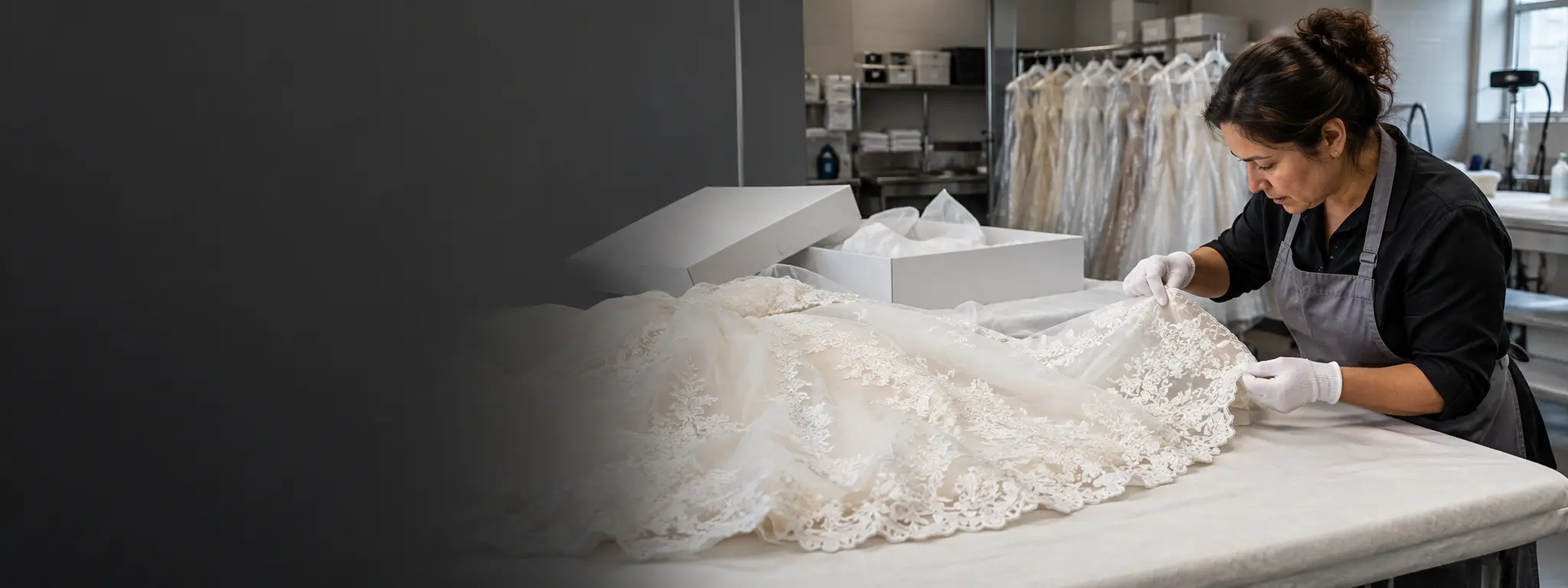
Start with the gown's care label and construction
Read the complete care label before trying to clean, steam or press the gown at home. Under the Federal Trade Commission's care-labeling guidance, garment instructions identify a supported regular-care method and should include warnings when part of that method could cause harm. A wedding dress may also combine an outer fabric, lining, interfacing, boning, adhesives, lace, embroidery, beads and metallic details that respond differently to moisture, solvent, agitation and heat.
Do not choose a method from the fiber name alone. A polyester or silk label does not describe every component of the finished gown. If the label is missing, altered or difficult to interpret, arrange an item-specific evaluation. The cleaner needs to consider the complete dress, including embellishments, glued trim, color contrast, previous alterations and any damage from wear.
Arrange post-wedding care before long-term storage
You do not need to rush the dress from the reception directly to a cleaner, but avoid leaving it untreated for months. Soil around the hem, train and underarms can be easy to overlook. Clear drinks, cake, body oils and perspiration may leave little visible color at first yet still remain in the textile. The longer a residue sits, the more difficult it may become to identify and address safely.
Before drop-off, inspect the hem, train, bodice, underarms, neckline and sleeves in good light. Point out every area of concern, including spots that dried clear. Tell the cleaner what caused a stain when you know, when it occurred and whether water, a stain product, heat or another treatment was used. Complete removal cannot be guaranteed because the substance, dye, fabric, age and previous treatment all affect the safe options.
Avoid home stain remedies and unapproved steaming
Keep first aid conservative. Lift loose material gently and blot fresh liquid with a clean, absorbent white cloth without rubbing. Do not use bleach, dish soap, stain pens, club soda, hairspray or a homemade mixture unless the gown's instructions specifically support that treatment. A product can disturb dye, leave a ring, change a finish or affect delicate trim even when it appears harmless on ordinary clothing.
Do not iron or steam the gown simply because it looks wrinkled. Heat and moisture can affect some finishes, adhesives, embellishments and synthetic fabrics. Pre-event finishing and post-event cleaning are different needs, so explain whether the dress is being prepared for a wedding, cleaned after wear or readied for storage. If there is a firm event date, allow time for inspection and confirm the expected completion date before leaving the gown.
Cleaning and preservation are not the same service
Cleaning addresses soil and stains using a process chosen for the gown's label, materials and condition. Professional finishing may also be appropriate when the dress is being prepared to wear. Preservation adds packaging and storage preparation intended to protect a cleaned gown over a longer period. Putting an unclean dress into a special box does not substitute for cleaning.
Preservation also does not freeze a gown permanently in its current condition or guarantee that every material will remain unchanged. Dyes, adhesives, finishes and embellishments can age differently. Ask what the preservation service includes, whether accessories can be packed with the gown, how the dress will be supported and what instructions apply after it is returned. Follow the provider's directions rather than opening, refolding or repackaging it casually.
Transport the gown without adding new damage
Support the weight of the dress when moving it. Do not carry a heavy or embellished gown only by narrow shoulder straps, and do not force a full skirt or long train into a small bag. Keep it away from food, drinks, cosmetics, pets, smoke and damp areas while waiting for evaluation. If the dress is wet, do not seal it in plastic; arrange prompt professional guidance.
For short transport, use the garment bag supplied with the gown when it is clean, dry and large enough to avoid crushing the dress. Keep the gown inside the passenger compartment rather than a hot trunk when practical, and do not place heavy objects on it. Bring removable pieces such as belts, bows or matching accessories only when they need evaluation, and tell the cleaner which pieces belong together.
Choose storage based on weight, condition and packaging
A heavy, fragile or heavily embellished dress may not be a good candidate for long-term hanging because gravity can strain shoulders, straps and seams. Textile-conservation guidance from the Smithsonian recommends taking heirloom textiles such as wedding dresses off hangers, supporting folds and using suitable archival materials for storage. That museum-oriented advice is a useful principle, but the correct arrangement for a particular gown still depends on its construction and the preservation system used.
Store the returned gown in a clean, dark, dry interior space with a stable household environment. Avoid garages, attics, damp basements, direct sunlight, plumbing risks and areas exposed to large swings in heat or humidity. Do not wrap the gown in ordinary plastic or replace preservation materials with colored tissue or household cardboard. Keep the box supported on a shelf rather than directly on the floor, and follow any inspection guidance supplied with the service.
Plan ahead if the dress may be worn again
If the gown will be resold, altered, photographed or worn by another person, mention that before service. The next use can affect timing, finishing and how the dress should be packaged. Inspect the gown well before the next event instead of opening it at the last minute. Alterations, pressing and any item-specific concerns may require separate time.
Bring the gown to a store for an individual review rather than assuming every wedding dress follows the same process. Comet Cleaners North Houston's wedding dress cleaning and preservation page explains how the label, fabric, embellishments, hem and visible staining are considered before a recommendation is made. Use the locations page to choose a nearby store and discuss the gown's condition and your plans for it.